
Thirteen.

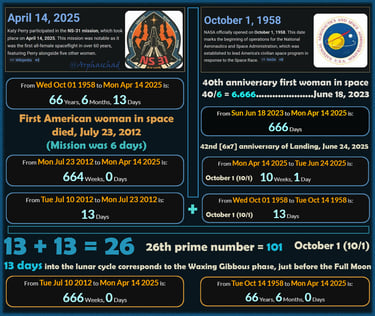




Donald J Trump Inaigurated January 20, 2025, exactly 666 months , 0 days after First Moon Landing
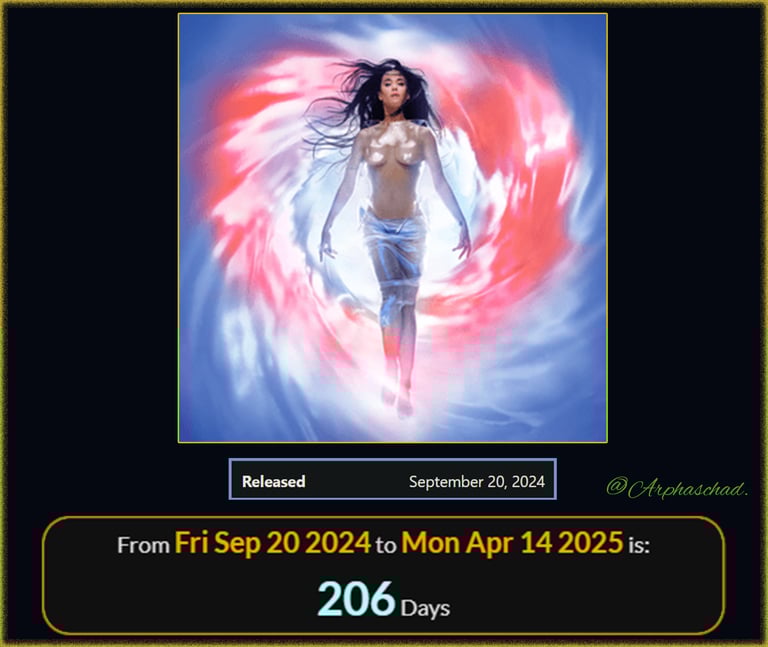
The number 13 has been deeply associated with the feminine principle across cultures and throughout history, often in direct opposition to patriarchal attempts to demonize or suppress it.
Lunar Cycles and the Feminine Year
The most ancient and universal connection comes from the moon. A lunar cycle (from new moon to new moon) averages 29.5 days. This means there are approximately 13 lunar months in a solar year
(365.25 ÷ 29.5 ≈ 13.01).
Ancient cultures that followed lunar-solar calendars—such as many pre-Christian European, Mesopotamian, and Indigenous American societies—organized time around 13 moons rather than 12. Women’s menstrual cycles also average 28–29 days, aligning closely with the lunar month. Thus, 13 became a sacred number of feminine rhythm, fertility, blood, and renewal.
In many matrifocal or goddess-centered traditions, the year was divided into 13 months of 28 days each (13 × 28 = 364), with one “day out of time” for celebration and realignment. Remnants of this survive in modern witchcraft and neopagan calendars (e.g., the 13 moons of the Wiccan “Wheel of the Year” in some traditions).Goddesses Explicitly Linked to 13In ancient Greece, Hecate, the triple goddess of witchcraft, crossroads, and the moon, was honored on the 13th day of the month.
The Norse goddess Freya (love, magic, death, and seiðr witchcraft) ruled over the “unlucky” Friday the 13th—Friday being her sacred day (compare to Venus → vendredi in French).
In some Celtic traditions, there were 13 lunar priestesses guarding sacred wells or serving the goddess Brigid.
Pre-Columbian Mesoamerican mythology often featured 13 heavens or 13 major deities in the feminine-associated night sky.
The Suppression of 13 and the Rise of 12
With the rise of solar, patriarchal calendars (12 months, 12 apostles, 12 signs of the zodiac in the Babylonian/Greek system, 12 knights of the Round Table, 12 hours on the clock face), the older lunar-feminine 13 was deliberately sidelined ?.
The Christian Church, in particular, associated 13 with betrayal and chaos ?
13 people at the Last Supper (Jesus + 12 apostles)
Judas as the 13th guest
Friday the 13th became “unlucky” partly because it combined Freya’s day (Friday) with the moon’s number (13)—a remnant of suppressed goddess worship.This campaign reached its peak in the Middle Ages, when 13 became linked to witchcraft covens (“a coven is 13 witches”) and to the alleged 13 menstrual cycles that made women “impure” or dangerous in medieval Christian thought. Modern Reclamation Contemporary feminist spirituality, witchcraft, and goddess movements have consciously reclaimed 13 as a number of feminine power: Many modern covens deliberately meet in groups of 13.
“13 Goals of a Witch” and “13 Principles of Wiccan Belief” (from the 1970s American neopagan movement).
The 13-moon “Peace Calendar” promoted by José Argüelles and some eco-feminist groups as an alternative to the Gregorian 12-month system.
Other Symbolic Connections
13 is the age traditionally associated with a girl’s menarche and coming-of-age in many cultures (bat mitzvah at 12 or 13, quinceañera at 15 in Latin America is a later overlay).
The human female body is said in some esoteric traditions to have 13 major joints or “gates” (neck, shoulders, elbows, wrists, hips, knees, ankles).
The Tarot’s 13th Major Arcana card is Death—ruled by the sign Scorpio, which is associated with the womb, menstruation, and transformation; i.e., feminine mysteries of destruction and rebirth.
In short, 13 is the number of the moon, of blood, of the goddess in her dark and light aspects, and of the ancient feminine calendar that was largely erased by solar-patriarchal timekeeping. Its “unluckiness” in mainstream Western culture is widely understood today as the echo of a very old war on the feminine sacred.
Esther, the Number 13, and the Hidden Lunar-Feminine Thread
The Book of Esther in the Hebrew Bible is one of only two books named after a woman (the other being Ruth). On the surface it is a story of Jewish survival in the Persian empire, but beneath it runs a profound lunar and feminine symbolism centered on the number 13.
Esther and the 13th Day
The central crisis of the story revolves around the 13th day of the 12th month (Adar): Haman casts lots (purim) and decrees that on the 13th of Adar all Jews will be killed.
Esther, after three days of fasting, risks her life and approaches the king on the third day—but the decree itself is reversed so that the Jews triumph precisely on that same 13th of Adar.
Thus the 13th day is transformed from the day of intended massacre into the day of deliverance. The holiday of Purim (celebrated on the 14th and 15th) still commemorates the victory that occurred on the 13th–14th.
In Jewish mystical tradition (especially Kabbalah and later Hasidic thought), this reversal is seen as the ultimate redemption of the number 13: what patriarchy and empire intended for destruction (Haman = Amalek = the masculine solar principle of domination) is overturned by a woman acting in secret, behind the scenes, through beauty, timing, and hidden wisdom—classic attributes of the Divine Feminine.
Esther herself is explicitly linked to the moon:Her Hebrew name is Hadassah (myrtle), a plant sacred to Venus and used in lunar rites.
The Greek version of her name, Esther, is possibly derived from Ishtar (the Babylonian moon and love goddess) or directly from the Persian word for “star” (linked to the planet Venus, the morning/evening star).
The Book of Esther never once mentions God by name—making it the most “secular” book in the Bible—yet Jewish tradition says the Divine Presence (Shekhinah, the feminine aspect of God) is hidden throughout the text, acting through Esther.
So Esther is a lunar queen who redeems the 13th day, turning it from curse to blessing.
The Bridge to Our Lady of Fatima
On May 13, 1917, the Virgin Mary first appeared to three Portuguese shepherd children in Fátima. She returned on the 13th of every month until October 13, 1917, when the Miracle of the Sun was witnessed by 70,000 people.She asked that the 13th of each month be consecrated to her Immaculate Heart and gave the children three secrets. The entire cycle is therefore framed by the number 13—six [planned] apparitions on the 13th, culminating on October 13.
The Virgin Mary appeared to the shepherd children (Lucia, Jacinta, and Francisco) on the 13th of each month from May to October 1917.
Exception: In August 1917, the children were detained by the local civil administrator in Ourem, who was hostile to the apparitions and tried to stop them from reaching the Cova da Iria.
Because of this, Our Lady did not appear on the 13th as was planned
Instead, she appeared a few days later, on August 19, 1917.
This deliberate choice of the 13th did not escape Catholic mystics and Marian scholars. Several key connections are drawn between Fatima and the Book of Esther:Both are stories of a hidden feminine power overturning a death decree Haman’s decree → attempted genocide of the Jews on the 13th
The third secret of Fatima (revealed in 2000) is widely interpreted as foretelling an attempt on the Pope’s life and a larger crisis for the Church and the world—again, a threatened destruction that Mary comes to avert.
Esther as a “type” of Mary
Medieval and modern Catholic typology often sees Esther as a prefigurement of the Virgin Mary: a queen who intercedes with the king to save her people. Just as Esther approaches Ahasuerus uninvited (risking death) to plead for her people, Mary appears uninvited at Fatima to plead for humanity through the Pope (“the bishop in white”).
The lunar calendar connection
Many traditionalist and mystical Catholics note that the Fatima apparitions consciously re-claim the 13th of the month—the ancient lunar-feminine number that Christianity had demonized (Friday the 13th, etc.). By appearing on the 13th, Mary is understood to be healing and redeeming the suppressed feminine principle, just as Esther redeemed the 13th of Adar.
The name “Esther” re-appears in Fatima lore
Sister Lúcia (the eldest visionary) later revealed that during the July 13 apparition, Mary showed the children a vision of hell and then said:
“You have seen hell where the souls of poor sinners go. To save them, God wishes to establish in the world devotion to my Immaculate Heart.”
Some Jewish-Catholic scholars point out that the Hebrew gematria (numerical value) of the phrase “Immaculate Heart of Mary” in certain devotional contexts reduces to 13 in symbolic ways, and that Mary’s role as the “Woman Clothed with the Sun” (Revelation 12) echoes Esther as the star-queen.
In short Esther is the hidden lunar queen who turns the 13th day from genocide to celebration.
Our Lady of Fatima is the revealed lunar queen (the Woman of the Apocalypse, clothed with the sun, crowned with 12 stars + herself making 13) who chooses the 13th day of the month to appear and turn a coming 20th-century catastrophe into a path of possible salvation through her Immaculate Heart.Together they form a mystical diptych: the Old Testament Esther redeems the 13th in the era of the hidden Shekhinah; the New Testament Mary redeems the 13th again in the era of the revealed Immaculate Heart—both acting as feminine intercessors who reverse decrees of death on the ancient number of the moon.
The Virgin Mary appeared to the shepherd children (Lucia, Jacinta, and Francisco) on the 13th of each month from May to October 1917.
Exception: In August 1917, the children were detained by the local civil administrator in Ourem, who was hostile to the apparitions and tried to stop them from reaching the Cova da Iria.
Because of this, Our Lady did not appear on the 13th as usual.
Instead, she appeared a few days later, on August 15, 1917, which is also the Feast of the Assumption of Mary,


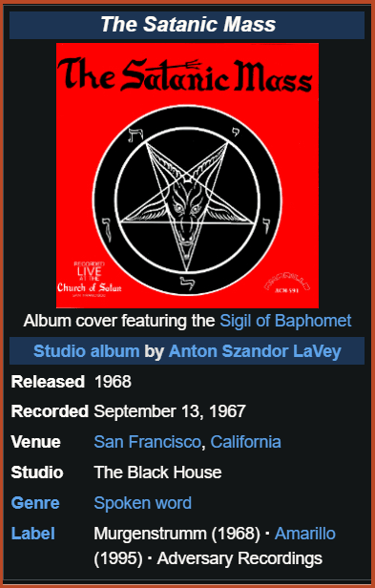
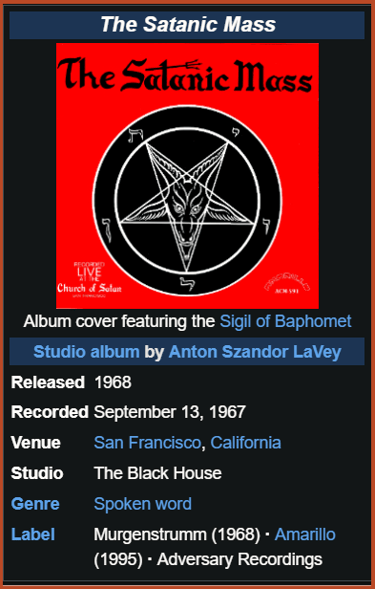
Recorded September 13, 1967